
That Frustrating Moment When Your Garage Door Won't Stay Closed
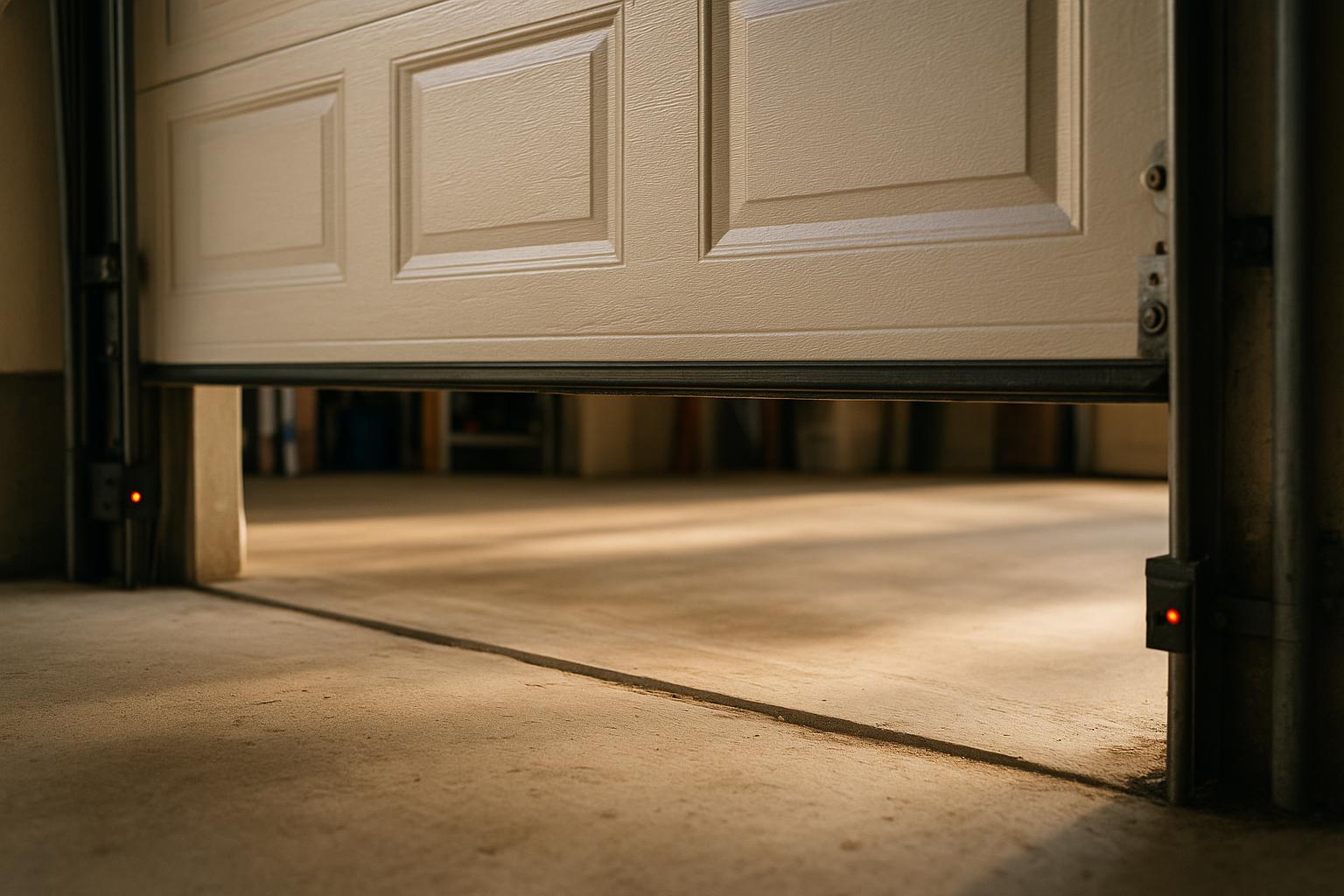
You press the button on your remote, the garage door starts its descent, and then — just inches from the ground — it stops, reverses, and goes right back up. You try again. Same result. Maybe it works on the third try, maybe it doesn't. Either way, you're standing in your driveway in St Joseph wondering what just happened.
This is one of the most common garage door complaints we hear at St Joseph Garage Door Pro, and the good news is that it's usually caused by something identifiable and fixable. The bad news? Ignoring it can lead to bigger problems down the road, including a door that won't close at all — leaving your garage, your vehicles, and your home exposed.
Let's walk through the most common reasons your garage door reverses before reaching the floor and what you can do about each one.
Understanding Your Garage Door's Safety Reversal System
Before we dive into causes, it helps to understand why your door is designed to reverse in the first place. Federal law has required garage door openers manufactured after 1993 to include two safety reversal mechanisms:
- Photo-eye sensors: Two small sensors mounted near the bottom of the door tracks on either side. They send an invisible beam across the opening. If anything breaks that beam, the door reverses.
- Auto-reverse mechanism: If the door physically contacts an object while closing, it's designed to immediately reverse direction.
These features exist to prevent injuries and property damage. So when your door reverses unexpectedly, it's usually because one of these safety systems has been triggered — even when nothing is actually in the way.
Cause #1: Misaligned or Dirty Photo-Eye Sensors
This is the number one reason garage doors reverse prematurely, and it's often the easiest to fix. Those photo-eye sensors near the floor of your garage are sensitive. Over time, they can become misaligned from a bump, vibration, or even settling of your garage structure. They can also get covered in dust, cobwebs, or moisture — all of which are common in St Joseph garages, especially during our humid summers and dusty fall months.
What to Check
- Look at both sensors. Most have a small LED light. If one is blinking or off, that sensor may be misaligned or obstructed.
- Gently wipe the lens of each sensor with a soft cloth.
- Make sure both sensors are pointing directly at each other. Even a slight angle can break the beam.
- Check that no objects — tools, trash cans, garden hoses — are sitting near the sensors and partially blocking the beam.
If cleaning and realigning the sensors solves the problem, you're in the clear. If the lights still blink after adjustment, the wiring or the sensors themselves may need replacement.
Cause #2: Incorrect Close-Limit Settings
Your garage door opener has limit settings that tell it how far the door should travel before it's considered fully open or fully closed. If the close-limit setting is off, the opener may think the door has hit an obstruction when it's actually just reaching the floor. It interprets the resistance as a safety issue and reverses.
What to Check
Most openers have adjustment screws or dials on the motor unit — typically labeled "down limit" or "close limit." Consult your owner's manual for the exact location and adjustment instructions. Small adjustments — usually a quarter turn at a time — can make a significant difference. However, if you're not comfortable making this adjustment yourself, it's a quick fix for a professional technician.
Cause #3: Worn or Damaged Tracks
The metal tracks that guide your garage door up and down need to be straight, clean, and properly aligned. Over time, tracks can develop bends, accumulate debris, or shift out of alignment. When this happens, the door encounters resistance during its travel, and the opener's auto-reverse kicks in.
What to Check
- Visually inspect both tracks for obvious bends, dents, or gaps between the track and the wall.
- Look for buildup of dirt, grease, or small debris inside the track channel.
- Listen for scraping or grinding sounds when the door moves — these often indicate track issues.
Minor debris can be cleaned out carefully, but bent or misaligned tracks should be handled by a professional. Attempting to force a track back into position without the right tools can make things worse or create a safety hazard.
Cause #4: Problems with Springs or Cables
Your garage door's springs and cables do the heavy lifting — literally. They counterbalance the weight of the door so the opener doesn't have to do all the work. When a spring is weakening or a cable is fraying, the door becomes harder to move. The opener senses this extra resistance and may reverse as a safety precaution.
If you notice your door seems heavier than usual, moves unevenly, or you can see visible wear on the cables, it's time to call a professional. Spring and cable repairs are dangerous and should never be attempted as a DIY project. The tension stored in these components can cause serious injury.
Cause #5: The Opener Itself Is Failing
Garage door openers don't last forever. Most have a lifespan of 10 to 15 years, depending on usage and maintenance. As the motor, logic board, or internal gears wear out, the opener may start behaving erratically — including reversing for no apparent reason.
Signs Your Opener May Need Replacement
- The door reverses even after you've ruled out sensors, tracks, and limit settings.
- The opener makes unusual humming, clicking, or grinding noises.
- The unit is more than 12 years old.
- It operates inconsistently — sometimes working fine, sometimes not.
If your opener is nearing the end of its life, upgrading to a modern unit can improve reliability, security, and even noise levels. Newer models also include features like smartphone connectivity and battery backup, which can be especially useful during St Joseph's occasional power outages from storms.
When to Call a Professional
Some of these issues — cleaning sensors, clearing debris from tracks — are reasonable for a handy homeowner to tackle. But if you've gone through the basics and your door is still reversing, or if the problem involves springs, cables, or the opener's internal components, it's time to bring in help.
At St Joseph Garage Door Pro, we diagnose reversing issues quickly because we see them regularly in homes throughout St Joseph, Savannah, Country Club, and the surrounding communities. We'll identify the root cause, explain your options honestly, and get your door working properly — usually in a single visit.
Don't Let a Reversing Door Become a Bigger Problem
A garage door that won't close all the way isn't just annoying — it's a security risk. An open garage is an invitation for theft, pests, and weather damage. It also puts extra strain on your opener every time it cycles without completing its travel, which can shorten the unit's lifespan.
If your garage door has been giving you trouble, don't wait for it to fail completely. Give us a call or reach out online. We serve homeowners across St Joseph and nearby areas like Agency, Elwood, and Wathena with straightforward service and fair pricing. We'll get your door closing the way it should — and staying closed.