
Why Cold Weather and Garage Doors Don't Always Get Along
If you've lived in St Joseph for more than a winter or two, you know how brutal the cold can get. Temperatures dip well below freezing, ice builds up overnight, and the wind chill makes everything feel ten degrees worse. What you might not realize is that your garage door is one of the first things to feel the effects of a harsh Missouri winter.
Every year, we get calls from homeowners across St Joseph and the surrounding areas — Savannah, Country Club, Elwood, and beyond — who wake up on a frigid morning only to find their garage door won't budge. It's frustrating, especially when you're trying to get to work. But the good news is that most cold-weather garage door problems have straightforward causes and solutions.
The Weatherstrip Is Frozen to the Ground
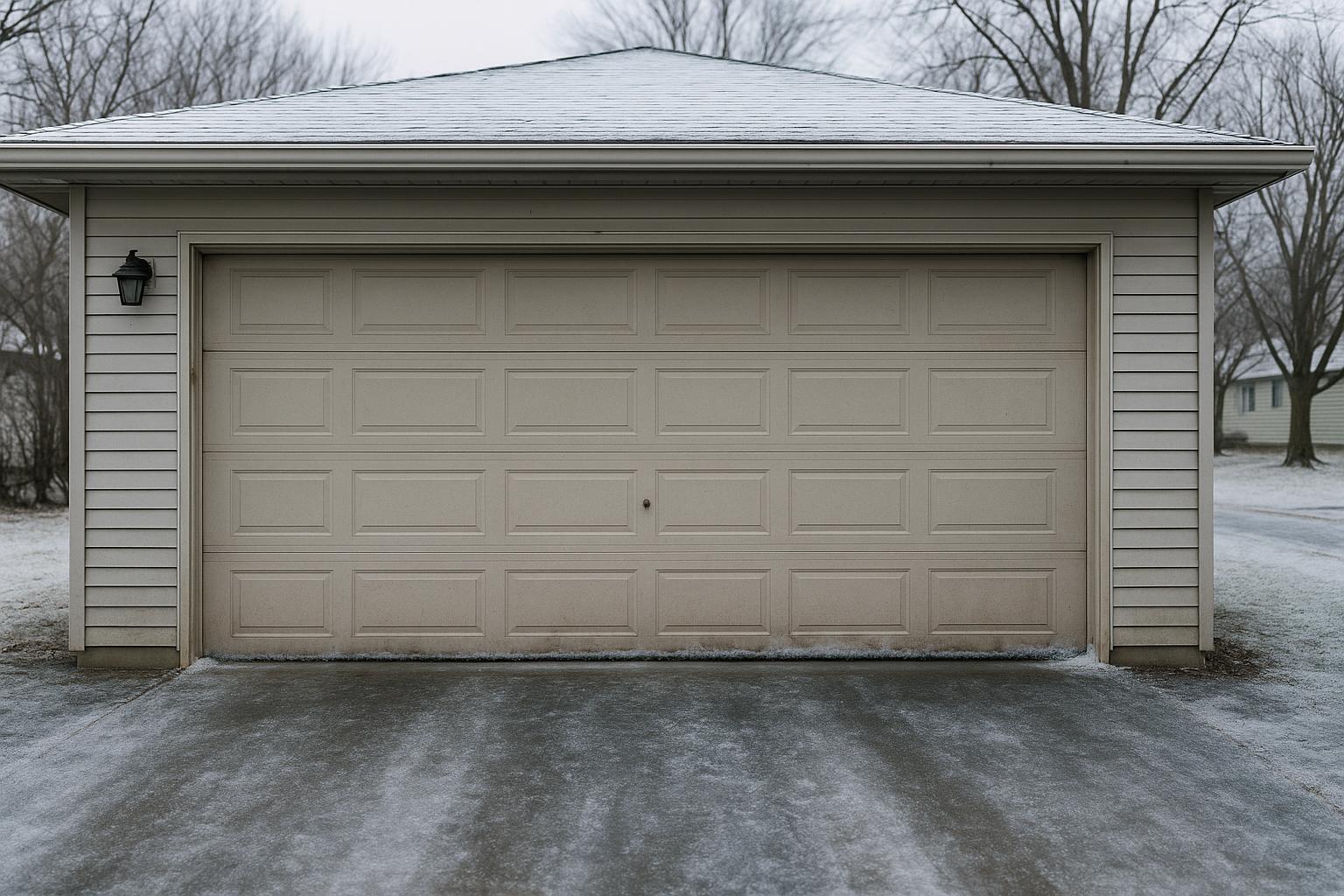
This is the single most common reason a garage door refuses to open in winter. The rubber weatherstrip along the bottom of your door is designed to create a seal between the door and the concrete floor. That seal keeps out drafts, rain, and pests. But when moisture collects underneath the door and temperatures drop overnight, that rubber strip can literally freeze to the ground.
When you hit the opener button, the motor strains against the frozen seal. In some cases, the door won't move at all. In others, the opener might disengage its safety features and stop trying.
What You Can Do
- Never force the door open. Yanking on a frozen door can tear the weatherstrip, damage the bottom panel, or burn out your opener motor.
- Use a heat source carefully. A hair dryer or heat gun on a low setting can gently melt the ice along the bottom seal. Work slowly from one side to the other.
- Apply a de-icing product. A small amount of rubbing alcohol or a commercial de-icer along the base of the door can break the bond without damaging the rubber.
- Prevent it from happening again. Apply a thin layer of silicone-based lubricant to the weatherstrip before the next freeze. This creates a barrier that resists moisture bonding.
Metal Parts Contract in the Cold
Your garage door system is made up of dozens of metal components — springs, tracks, hinges, rollers, and cables. When temperatures plummet, metal contracts. This contraction can cause several issues:
- Springs lose tension. Torsion and extension springs are calibrated to lift a specific amount of weight. When they contract in cold weather, they may not generate enough force to lift the door smoothly. You might notice the door feels heavier than usual or only opens partway.
- Tracks tighten. Slight contraction in the metal tracks can increase friction on the rollers, making the door sluggish or causing it to bind in certain spots.
- Hinges and rollers stiffen. Lubricant on moving parts can thicken or dry out in extreme cold, adding resistance to every movement.
What You Can Do
A thorough lubrication of all moving parts before winter arrives makes a significant difference. Use a silicone-based or lithium-based garage door lubricant on the springs, rollers, hinges, and tracks. Avoid WD-40 for this purpose — it's a solvent, not a long-lasting lubricant, and it won't hold up in freezing conditions.
If your door is struggling to open even after lubrication, the springs may need adjustment or replacement. This is a job best left to a professional, since garage door springs are under extreme tension and can cause serious injury if handled incorrectly.
Your Garage Door Opener Is Struggling
Electric garage door openers have limits. Most residential openers are rated for a specific lifting capacity, and they rely on consistent conditions to operate properly. Cold weather can push an opener past its comfort zone in a few ways:
- Increased door resistance. Between frozen seals, contracted metal, and thickened lubricant, your door becomes harder to move. The opener has to work harder to compensate.
- Weakened battery backup. If your opener has a battery backup, cold temperatures reduce battery performance. You might find the backup doesn't work when you need it most — during a winter power outage.
- Sensitivity settings. Most modern openers have force and sensitivity settings that tell the motor how hard to push and when to stop. If the door's resistance increases due to cold, the opener might interpret that resistance as an obstruction and stop or reverse.
What You Can Do
Check your opener's manual for instructions on adjusting the force settings. A small increase in the close-force setting can help the opener push through the added resistance of cold weather. Just be careful not to set it too high — the safety features exist for a reason.
If you're not comfortable adjusting these settings yourself, a quick service call can get everything dialed in properly. We regularly help homeowners in St Joseph fine-tune their openers for seasonal changes.
Cracked or Damaged Panels Let in Moisture
Winter doesn't just affect the mechanical parts of your garage door. The panels themselves can suffer too. Older wooden doors may warp or crack as they absorb moisture and then freeze. Steel doors with worn or peeling paint can develop rust spots that weaken the panel over time. Even small cracks allow cold air and moisture into your garage, which can lead to bigger problems down the road.
If you notice visible damage to your door panels, it's worth having them inspected before the worst of winter hits. In some cases, individual panels can be replaced without installing an entirely new door. In other cases — especially with older doors that have multiple issues — a full replacement might be the more cost-effective option in the long run.
Preventive Maintenance Makes Winter Easier
The best way to avoid cold-weather garage door headaches is to prepare before the temperatures drop. A seasonal maintenance checkup covers all the areas we've discussed and more:
- Lubricate all moving parts with a cold-weather-appropriate product.
- Inspect the weatherstrip for cracks, gaps, or wear, and replace it if needed.
- Test the balance of the door by disconnecting the opener and lifting the door manually. It should stay open about three to four feet off the ground. If it doesn't, the springs may need adjustment.
- Check the tracks for alignment and debris.
- Test the opener's safety features, including the auto-reverse and photo-eye sensors.
- Inspect panels, hardware, and cables for signs of wear or damage.
Taking thirty minutes to do this before the first hard freeze — or having a professional handle it for you — can prevent the kind of emergency calls nobody wants to make at seven in the morning when it's twelve degrees outside.
When to Call a Professional
Some cold-weather garage door issues are easy to handle on your own. A frozen weatherstrip or a squeaky hinge doesn't necessarily require a service call. But if your door won't open at all, if the opener is making unusual noises, if a spring appears damaged, or if you're unsure about adjusting any mechanical or electrical components, it's time to call in help.
At St Joseph Garage Door Pro, we've helped homeowners across St Joseph, Savannah, Agency, Wathena, and the surrounding communities get through every kind of winter garage door problem. Whether it's a quick repair or a conversation about upgrading to a better-insulated door, we're here to help you find the right solution without the runaround.
Don't wait until you're stuck in your driveway on the coldest morning of the year. A little preparation now goes a long way toward keeping your garage door running smoothly all winter long.