
Your Garage Door Shouldn't Sound Like That
You press the button on your garage door opener and brace yourself. The grinding starts, followed by a metallic screech, and maybe a loud bang when the door finally settles into place. If this sounds familiar, you're not alone. Noisy garage doors are one of the most common complaints we hear from homeowners across St Joseph, and while it's tempting to just turn up the radio and ignore it, those sounds are usually your garage door's way of telling you something needs attention.
The good news is that not every noise means a major repair. Some issues are simple fixes, while others are early warnings that can save you from a much bigger — and more expensive — problem down the road. Let's break down what different garage door noises mean and what you should do about them.
Squealing or Screeching Sounds
A high-pitched squeal when your garage door moves is one of the most common noises homeowners notice. In most cases, this points to one of two issues:
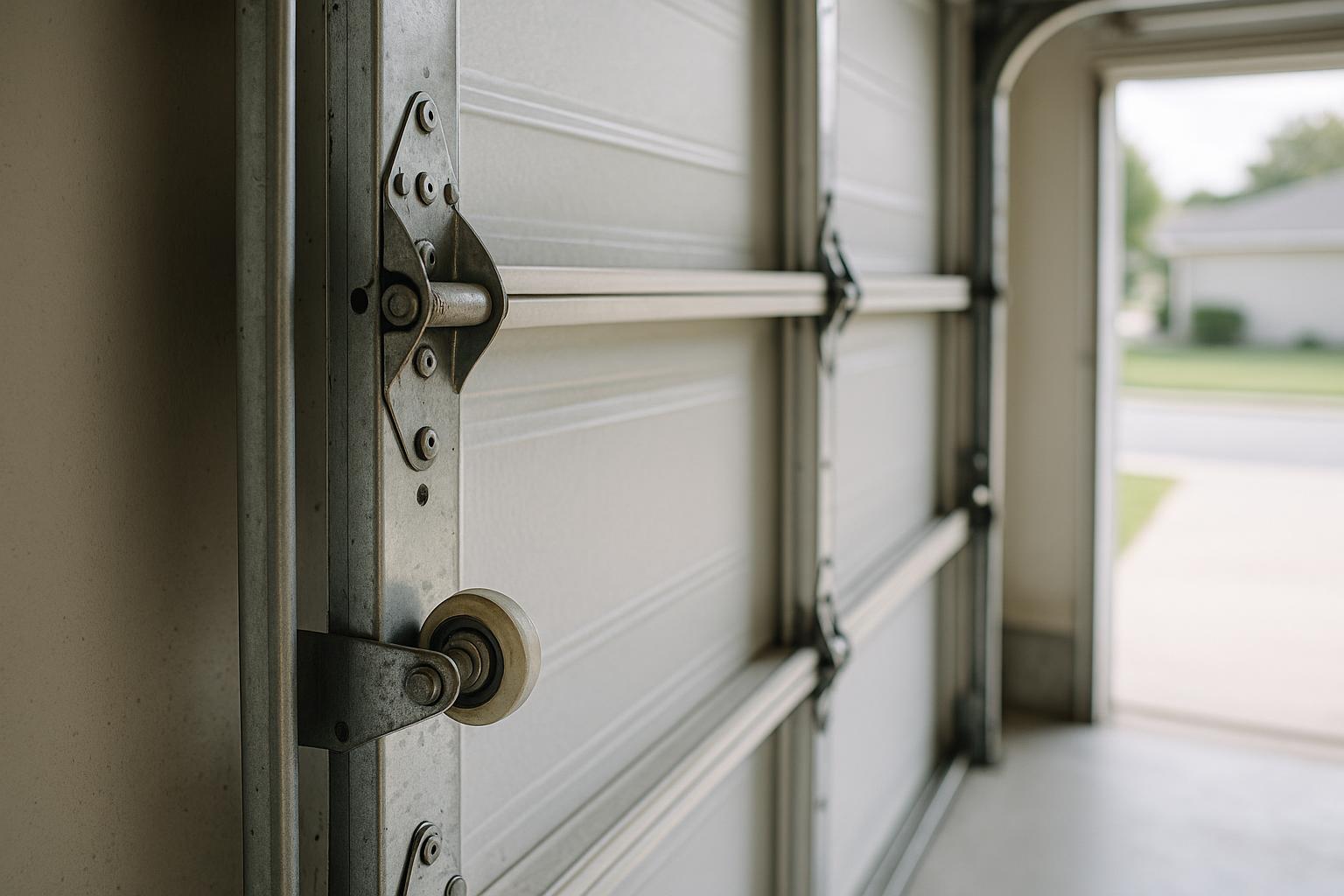
- Lack of lubrication. Your garage door system has many moving metal parts — rollers, hinges, springs, and tracks. Over time, the lubrication on these components dries out, causing metal-on-metal friction that produces that unmistakable screech. Applying a garage door-specific lubricant (not WD-40, which is a solvent, not a lubricant) to rollers, hinges, and springs can often quiet things down immediately.
- Worn-out rollers. If your door uses metal rollers, they wear down over time and can start scraping against the track. Nylon rollers are a popular upgrade because they're significantly quieter and don't require as much maintenance. If your rollers look worn, cracked, or are missing pieces, it's time for a replacement.
If you've lubricated everything and the squealing persists, it could indicate a deeper alignment issue that a professional should evaluate.
Grinding Noises
Grinding is a sound you don't want to ignore. It typically signals a more serious mechanical issue than simple friction. Common causes include:
- Misaligned tracks. When the metal tracks that guide your door become bent or shifted, the door grinds against them as it moves. This puts extra strain on the opener, the cables, and the door panels themselves. Left unchecked, misaligned tracks can cause the door to jam or even come off the tracks entirely.
- Opener gear problems. Many garage door openers use a drive gear to move the door. Over years of use, these gears can strip or wear down, producing a grinding sound even though the motor is running. If you hear the motor engage but the door barely moves or doesn't move at all, a stripped gear is likely the culprit.
Both of these issues are best handled by a trained technician. Track adjustments require precise work, and opener gear replacement involves working with the motor assembly — not a typical DIY project.
Rattling and Vibrating
A rattling garage door often sounds worse than it actually is. The most common causes are relatively straightforward:
- Loose hardware. Your garage door opens and closes hundreds of times a year. That constant movement causes nuts, bolts, and screws to gradually loosen. A simple pass with a socket wrench to tighten all the hardware on the door, tracks, and brackets can eliminate most rattling.
- Loose chain on a chain-drive opener. If you have a chain-drive garage door opener, the chain can develop slack over time. A loose chain slaps against the rail and creates a rattling or vibrating noise during operation. Adjusting the tension usually solves the problem.
- Vibration transfer. Sometimes the opener itself vibrates against the ceiling or the mounting bracket, amplifying the noise throughout your garage. Anti-vibration pads or a proper mounting kit can make a noticeable difference.
We recommend St Joseph homeowners check and tighten their garage door hardware at least twice a year, especially after the temperature swings we experience between summer and winter.
Banging or Popping Sounds
A loud bang or pop when your garage door operates can be startling. Here's what might be going on:
- Torsion spring issues. As torsion springs wind and unwind during each cycle, they can produce popping sounds if they're starting to wear out or if the spring coils are binding due to lack of lubrication. Since springs are under extreme tension, any spring-related work should always be left to a professional.
- Panel sections shifting. If the panels of your garage door aren't properly aligned or the hinges connecting them are loose, the sections can shift and pop as the door bends along the track curve. Tightening the hinges and inspecting the panels for damage usually addresses this.
- Temperature-related expansion. Here in St Joseph, our temperature swings can cause metal components to expand and contract. This can produce occasional popping sounds, especially during the first use of the day. While this is often harmless, persistent popping warrants a closer look.
Humming but Not Moving
If your garage door opener hums or buzzes but the door doesn't budge, the motor is engaging but the door isn't responding. This could mean:
- The door is locked or obstructed. Check the manual lock on the door and make sure nothing is blocking the tracks.
- A broken spring or cable. Without functional springs to counterbalance the door's weight, your opener motor simply can't lift it. The humming you hear is the motor straining against a load it was never designed to handle alone.
- A failing opener motor. Opener motors don't last forever. If your opener is more than 10 to 15 years old and struggling, it may be time for a replacement.
Running the opener repeatedly when the door won't move can burn out the motor, so if the door doesn't respond after one or two attempts, stop and call for help.
When to Call a Professional
Some garage door maintenance — like lubricating moving parts and tightening hardware — is perfectly safe for homeowners to handle. But any work involving springs, cables, tracks, or the opener's internal components carries real safety risks. Garage door springs are under enough tension to cause serious injury, and improperly adjusted tracks or cables can lead to the door falling unexpectedly.
If you've done the basics and the noise persists, or if you're hearing sounds that suggest something mechanical is failing, it's time to bring in a professional. Catching a problem early almost always costs less than waiting for something to break completely.
Keep Your Garage Door Running Quietly
The best way to prevent a noisy garage door is regular maintenance. A professional tune-up once a year can catch worn rollers, loose hardware, dry components, and alignment issues before they turn into noisy — or costly — problems. At St Joseph Garage Door Pro, we offer comprehensive maintenance services designed to keep your door operating smoothly and quietly all year long.
If your garage door has been making sounds that concern you, don't wait for a small issue to become a big one. Give us a call and we'll diagnose the problem, explain your options, and get your door back to running the way it should — quietly and reliably.