
Your Garage Door Springs Are Working Harder Than You Think
Most homeowners in St Joseph don't think about their garage door springs until something goes wrong. And when something does go wrong, it usually happens at the worst possible time — you're running late for work, it's freezing outside, or you've just pulled into the driveway with a car full of groceries.
Garage door springs are the unsung heroes of your entire garage door system. They bear the full weight of the door every time it opens and closes, and over time, they wear out. The good news is that failing springs almost always give you warning signs before they break completely. Knowing what to look for can help you schedule a replacement on your terms instead of dealing with an emergency.
What Do Garage Door Springs Actually Do?
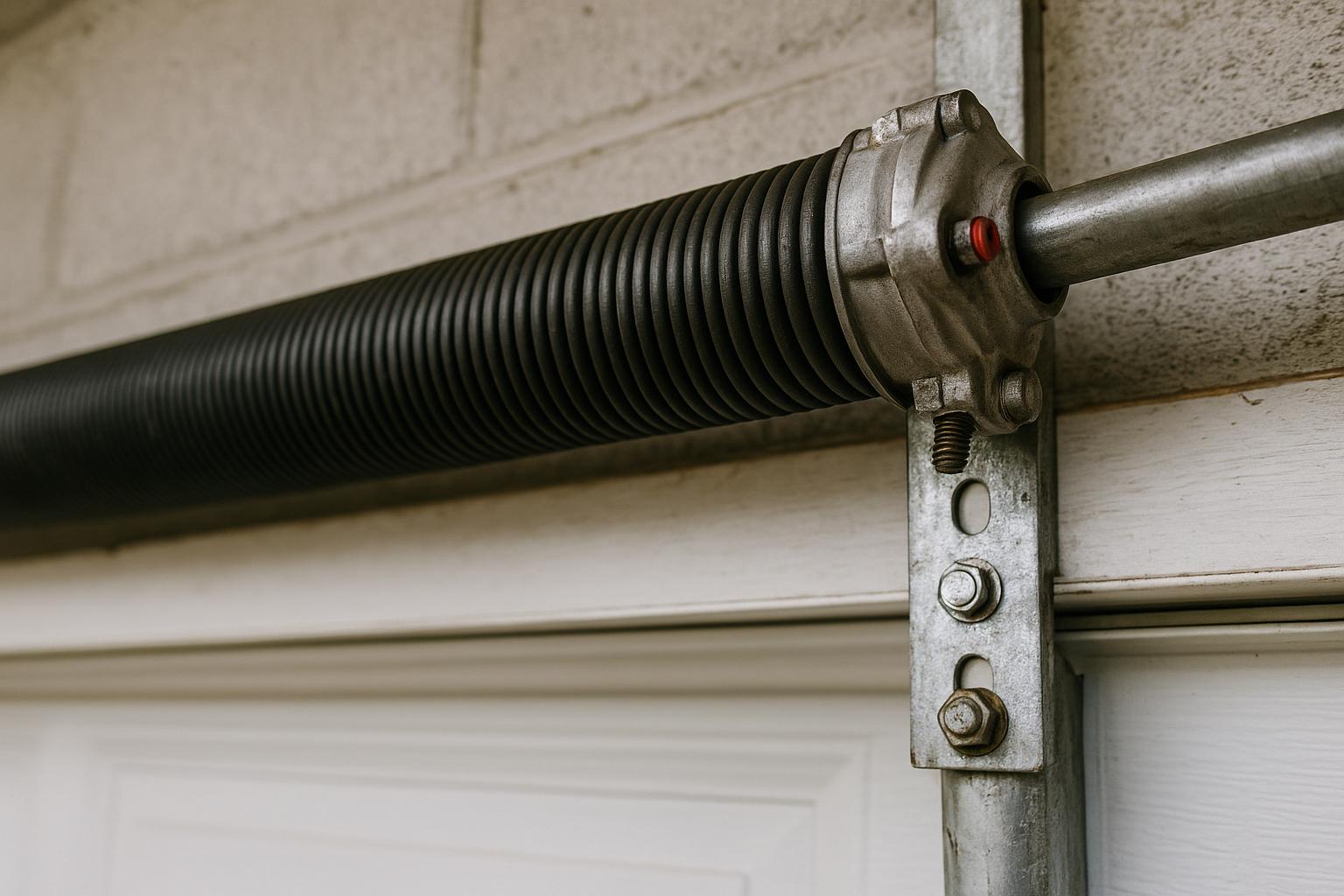
Your garage door likely weighs between 130 and 350 pounds depending on its size and material. The springs — whether they're torsion springs mounted above the door or extension springs along the horizontal tracks — store and release tension to counterbalance that weight. Without functioning springs, your garage door opener alone cannot lift the door. In fact, trying to operate a door with broken springs can burn out your opener motor quickly.
Most residential garage door springs are rated for approximately 10,000 cycles, with one cycle being a single open-and-close. If you use your garage door four times a day, that's roughly seven years of life. Homes where the garage door is the primary entry point may see even more use, shortening that lifespan further.
Warning Signs Your Springs Are Wearing Out
The Door Feels Heavier Than Usual
One of the earliest signs of spring fatigue is a door that feels noticeably heavier when you try to lift it manually. If you disconnect your opener and try to raise the door by hand, a properly balanced door should lift smoothly and stay open about three or four feet off the ground. If it slams back down or requires significant effort to raise, your springs are losing tension.
The Door Opens Unevenly or Crooked
If your garage door tilts to one side as it opens, one spring may be weaker than the other. This is especially common with extension spring systems that use one spring on each side. Uneven movement puts extra stress on your tracks, cables, and opener, which can lead to more expensive repairs down the road.
You Hear Loud Squeaking or Popping Sounds
Some noise during operation is normal, but loud squeaking, grinding, or popping sounds can indicate that your springs are struggling. Metal fatigue causes the coils to bind and release unevenly, creating sounds you haven't heard before. Don't ignore new noises — they're your door telling you something is wrong.
Visible Gaps in the Spring Coils
Take a look at your torsion spring above the door. A healthy spring has tightly wound coils with no visible gaps. If you notice a gap or separation in the coils — even a small one — the spring has already broken or is on the verge of breaking. This is one of the most obvious visual indicators and means you should stop using the door immediately.
The Opener Struggles or Stops Mid-Cycle
When springs lose their ability to counterbalance the door's weight, your opener has to work much harder. You might notice the motor straining, the door moving more slowly than usual, or the opener stopping partway through a cycle. Continuing to use the opener in this condition can cause permanent motor damage.
The Door Slams Shut Quickly
A door that drops faster than normal when closing is a serious safety concern. Weak springs can't control the descent of a heavy door, and the result is a door that crashes down instead of lowering smoothly. This is especially dangerous in homes with children or pets.
Why You Shouldn't Replace Garage Door Springs Yourself
We understand the DIY spirit — many homeowners in St Joseph and surrounding areas like Savannah and Country Club are handy and capable. But garage door spring replacement is one job that genuinely belongs to trained professionals. Here's why:
- Extreme tension: Torsion springs are wound under tremendous force. A spring that releases unexpectedly can cause severe injury or even death.
- Specialized tools required: Proper replacement requires winding bars, clamps, and other tools that most homeowners don't have.
- Matching specifications: Springs must be matched precisely to your door's weight, height, and track configuration. The wrong spring can damage your entire system.
- Warranty considerations: Many garage door and opener warranties are voided by DIY spring work.
Professional spring replacement typically takes less than an hour, and the cost is far less than repairing the damage caused by a botched DIY attempt or a catastrophic spring failure.
Should You Replace One Spring or Both?
If one spring breaks, we almost always recommend replacing both at the same time. Here's the reasoning: if one spring has reached the end of its lifespan, the other one is right behind it. They've endured the same number of cycles and the same conditions. Replacing both springs together saves you from paying for a second service call in a few weeks or months, and it ensures your door operates with balanced tension from the start.
How Regular Maintenance Extends Spring Life
While springs will eventually wear out no matter what, regular maintenance can help you get the most out of them. A few simple practices make a real difference:
- Lubrication: Apply a silicone-based garage door lubricant to your springs two to three times per year. This reduces friction and prevents rust, both of which accelerate wear.
- Balance checks: Once or twice a year, disconnect your opener and manually test the door's balance. If it doesn't stay put when opened halfway, your springs may need adjustment.
- Visual inspections: Take a minute to look at your springs, cables, and hardware every few months. Catching rust, fraying, or gaps early gives you time to plan a repair.
- Professional tune-ups: An annual maintenance visit from a qualified technician includes spring inspection, lubrication, balance adjustment, and a full safety check of your entire system.
Many of our customers in St Joseph, Agency, Elwood, and Wathena schedule annual maintenance visits and find that it significantly extends the life of their springs and other components.
Don't Wait for the Bang
A breaking garage door spring sounds like a gunshot inside your garage. It's startling, and it leaves you with a door that won't open until a technician can get there. By paying attention to the warning signs and scheduling a proactive replacement, you avoid the inconvenience, the safety risk, and often the higher cost of an emergency repair.
If your garage door has been acting differently — moving slowly, making new sounds, or feeling heavy — it's worth having your springs inspected. At St Joseph Garage Door Pro, we provide honest assessments and straightforward pricing. If your springs still have life in them, we'll tell you. If they need replacing, we'll get it done right so you can get back to your routine without worry.